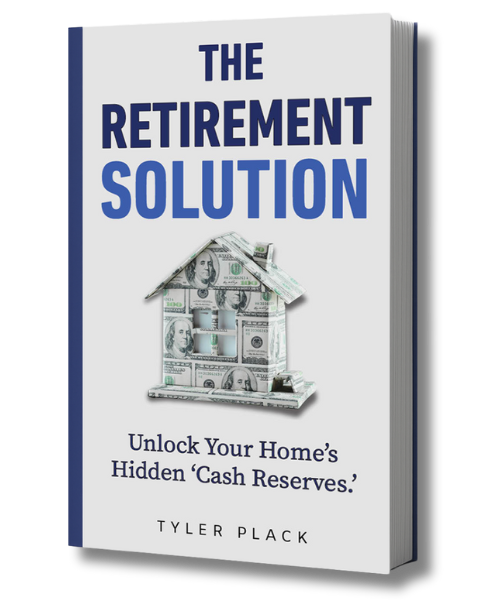




By Tyler Plack
Tyler Plack is the President of South River Mortgage. Tyler holds an active FHA Direct Endorsement (DE) underwriting certification and is the author of The Retirement Solution: Maximizing Your BenefitTyler is a seasoned entrepreneur and real estate investor renowned for his expertise in reverse mortgages and his commitment to addressing seniors' equity challenges. Tyler brings a unique perspective to his ventures, having built several successful companies throughout his career. His insights are frequently sought by industry publications, where he is recognized for his vast knowledge in the realm of reverse mortgages.
An avid investor in income-producing properties, Tyler is dedicated to helping seniors navigate their financial needs with compassion and expertise. When Tyler is not helping solve America's retirement crisis, he is a skilled pilot flying airplanes for fun.
If you’re reading this, your mom or dad probably said something like, “We’re thinking about getting a reverse mortgage.”
And your stomach probably did a little flip.
You’ve heard the warnings. You’ve seen the late-night TV ads. You’re not sure what’s true and what’s not. And honestly, you may be feeling a little protective of them — and maybe a little uncertain about what this means for the home you grew up in.
Take a breath. You’re not alone, and you’re asking the right questions.
This guide is for you. We’ll walk through what a reverse mortgage actually is, what it means for your parents and for you, and the questions worth asking before they sign anything. The goal isn’t to talk you into anything. It’s to give you the facts so you and your family can make a good decision together.

First, What Is a Reverse Mortgage?
A reverse mortgage is a loan that lets homeowners 62 and older turn part of their home equity into cash. They don’t have to make a monthly mortgage payment on it. Instead, the loan gets paid back later — when they sell the home, when it’s no longer their main residence, or after the last borrower passes away.
A few important facts to start with:
- Your parents still own the home. Their name stays on the title. The bank doesn’t take the house.
- They still pay property taxes, homeowners insurance, and basic upkeep.
- They can still leave the home to you. They don’t lose that right.
The most common type of reverse mortgage is called a HECM, or Home Equity Conversion Mortgage. It’s insured by the Federal Housing Administration (FHA) and follows strict rules set by HUD.
Those rules matter. They’re what makes today’s reverse mortgages much safer than the products you may remember from years ago.
Why Do Parents Choose Reverse Mortgages?
Most parents don’t bring up a reverse mortgage out of nowhere. There’s usually a reason. The most common ones are:
- They want to stay in their home. Aging in place is the #1 reason. They don’t want to move, and a reverse mortgage helps them afford to stay.
- Social Security and savings aren’t quite enough. Even careful planners run into rising costs — taxes, insurance, healthcare, groceries.
- They want to pay off their existing mortgage. Eliminating that monthly payment frees up real money each month.
- They want a financial backup plan. A reverse mortgage line of credit can sit there as a safety net for surprises.
- They want to make home repairs or aging-in-place updates. Walk-in showers, ramps, new roofs.
If your parents are asking about a reverse mortgage, they’re probably trying to solve one of these problems. It helps to understand which one before you weigh in.

The Big Question: What Happens to the Home?
This is what you really want to know. So let’s get to it.
When the last borrower on the loan passes away (or moves out permanently), the loan becomes due and payable.
As the heir, you have options:
Option 1: Keep the Home
You can pay off the loan and keep the house. This usually means either using your own funds or refinancing the home with a regular mortgage in your name.
Important detail: you don’t have to pay the full loan balance to keep the home. You only have to pay the loan balance OR 95% of the home’s current appraised value — whichever is less. This is a built-in protection that comes from the FHA insurance on the loan.
So if your parents borrowed $300,000 over the years and the home is now only worth $280,000, you’d only need to pay $266,000 (95% of $280,000) to keep it. The rest is covered by FHA insurance.
Option 2: Sell the Home
Most heirs choose this option. You sell the home, use the proceeds to pay off the loan, and keep whatever is left over.
If the home is worth more than the loan balance, the difference is yours. If the home is worth less, you owe nothing — the loan is settled and you walk away clean.
Option 3: Walk Away
If the home is worth less than the loan balance and you don’t want to deal with selling it, you can sign the deed over to the lender. This is called a deed in lieu of foreclosure. You hand over the keys, the loan is settled, and you owe nothing further.
Option 4: Do Nothing
You can also do nothing. The lender will eventually foreclose and sell the property. You won’t owe any difference.
The thing to know: you have time, but not unlimited time. The first notice usually gives heirs 30 days to respond. After that, it’s typically possible to get extensions up to 6 months, with the chance of two more 90-day extensions on top of that — giving you up to 12 months in many cases.
“But Could I End Up Owing Money?”
This is the question that keeps adult children up at night. The answer:
No. You will never owe more than the home is worth.
Reverse mortgages are non-recourse loans. That’s a fancy way of saying the home itself is the only thing the lender can come after. They can’t go after your savings, your other property, or your other assets. They can’t go after your parents’ other assets either.
If the loan balance ends up higher than the home’s value, FHA insurance covers the difference. Not you. Not your parents. Not your siblings.
This is one of the most important protections built into the program — and it’s one of the most misunderstood.
One small catch: when heirs sell the home, the sale has to be a real, arm’s-length sale to someone who isn’t a family member. You can’t “sell” the home to your cousin for $1 and expect FHA to cover the rest. That would be fraud. But a normal sale to a normal buyer is fine.
“Won’t This Wipe Out Their Savings or Their Estate?”
A reverse mortgage doesn’t touch their savings, retirement accounts, or other assets. It only touches the home equity.
What it will do is reduce the amount of equity in the home over time. As your parents draw funds and interest builds up, the loan balance grows. So when the home is eventually sold, there will be less equity left over than there would be without the loan.
That’s the trade-off. And it’s worth being honest about.
But here’s the thing many adult children realize when they think it through: if their parents need the money to live comfortably and stay in their home, the alternative may be worse.
That alternative could mean tapping retirement accounts (which is taxable), running out of money in their 80s or 90s, or being forced to sell and move when they don’t want to.
For most families, a smaller inheritance is a better outcome than a parent who runs out of money or has to leave the home they love.
Are You Eligible for a Reverse Mortgage?
(Find out in 60 seconds)
Common Worries — and the Honest Answers
“The bank is going to take the house.”
No. Your parents stay on the title. The bank doesn’t own the home and can’t take it as long as your parents follow the rules of the loan (live there, keep up with taxes and insurance, maintain the home).
“Reverse mortgages are scams.”
Reverse mortgages used to have a much worse reputation than they have today. Years ago, there were real problems with predatory lending, surprise terms, and aggressive sales tactics.
The program has been heavily reformed since then. Today’s HECM loans are federally insured, require independent counseling before application, and follow strict rules about disclosures and fees. That doesn’t mean every lender is great or every situation is right — but the product itself has changed a lot.
“What if my parent gets pressured into something they don’t understand?”
This is a real concern. Here are the protections built in:
- Mandatory counseling with an independent HUD-approved counselor before any loan application moves forward. The counselor doesn’t work for the lender.
- A three-day right of rescission that lets borrowers cancel the loan within three business days of closing, no questions asked.
- Required disclosures that spell out the terms, costs, and obligations in clear language.
The biggest thing you can do as an adult child is stay involved. Sit in on the counseling session if your parents want you there. Read the disclosures. Ask the lender questions directly.
“What if my parents stop being able to pay property taxes and insurance?”
This is the most common reason a reverse mortgage goes wrong, and it’s worth taking seriously.
If your parents fall behind on property taxes, insurance, or HOA fees, the loan can be called due — and that can lead to foreclosure.
There are protections that help:
- Lenders do a financial assessment up front to make sure your parents can keep up with these costs
- Some loans set aside funds specifically for property charges
- Modern HECM rules require ongoing communication with the loan servicer
But this is where adult children can really help. If you can keep an eye on whether property taxes and insurance are being paid each year, you’ll catch any problems early — before they snowball.

Questions to Ask Before Your Parents Sign
If your parents are seriously considering a reverse mortgage, here are the questions worth asking — together, as a family:
- Why are we doing this? What’s the actual goal? Income? Paying off the existing mortgage? A safety net? The right answer changes the right loan structure.
- How will the money be received? Lump sum, line of credit, monthly payments, or a mix?
- What happens if one parent passes away first? Are both parents listed as borrowers? If not, what happens to the surviving spouse?
- Who will handle the property charges (taxes, insurance) over time? Does someone need to keep an eye on this?
- What’s the plan if mom or dad has to move into care? What’s the timeline?
- What are all the fees? Origination, mortgage insurance, closing costs, servicing fees — get them in writing.
- Have we talked to the family? Everyone affected by the decision should have a chance to weigh in.
There are no wrong answers here. The point is to make the decision with the full picture in front of everyone.
How You Can Help
The most useful things you can do as an adult child:
- Stay informed. Read what your parents are reading. Sit in on calls if they want you to.
- Ask questions, but don’t take over. It’s their decision and their home.
- Help them compare options. A reverse mortgage isn’t always the right answer. Sometimes downsizing, a HELOC, or family help makes more sense.
- Watch out for the property charges over time. This is the biggest single risk to the loan.
- Talk openly about the home and the inheritance. It’s awkward, but the conversations get easier the earlier you have them.
The families who navigate this best are the ones who treat it as a team decision — not a secret one.
The Bottom Line
A reverse mortgage isn’t right for every family. But for many, it’s a smart way to help parents stay in their home, stay financially stable, and stay in control of their lives — without putting the family at financial risk.
Your concerns are valid. Ask the questions. Get the answers. Stay involved.
And remember the most important fact: you will never owe more than the home is worth, and you’ll always have options.

See What Your Parents May Qualify For
If your parents are considering a reverse mortgage, the best place to start is to run the numbers.
You can get a personalized estimate in seconds using our free calculator. No pressure. No obligation.
Get an instant quote today and see what may be possible.
If you or your parents would rather talk it through with a real person, our team is happy to walk you through the options. Call us at (888) 249-5651.
FAQ — For Adult Children of Reverse Mortgage Borrowers
Will I be responsible for my parents’ reverse mortgage debt?
No. Reverse mortgages are non-recourse loans. You will never owe more than the home is worth. If the loan balance is higher than the home’s value when it’s settled, FHA insurance covers the difference — not you.
Can I still inherit my parents’ home?
Yes. You have several options when they pass away or permanently move out. You can keep the home (by paying off the loan or 95% of the appraised value, whichever is less), sell it and keep any leftover equity, or walk away with no further obligation.
How much time do I have to make a decision?
Heirs typically have 30 days after the initial due-and-payable notice to respond, with extensions available — often up to 6 months, plus two more 90-day extensions in many cases. That’s why staying in contact with the loan servicer matters.
Will this hurt my credit?
No. The loan is in your parents’ names, not yours. You have no contract with the lender, and the loan doesn’t appear on your credit report.
What if my parents owe more than the home is worth?
You have nothing to worry about financially. You can either walk away (sign a deed in lieu of foreclosure) or do nothing and let the lender handle the property. You won’t owe a dollar.
Can I sit in on my parents’ counseling session?
Yes, if your parents want you there. This is encouraged, especially for adult children who want to understand the loan. Just ask the counselor ahead of time.
What’s the biggest risk to watch out for?
The biggest risk is your parents falling behind on property taxes, homeowners insurance, or HOA fees. Falling behind on these can put the loan in default. As an adult child, helping your parents track these payments is one of the most useful things you can do.
Should we talk to a financial professional before deciding?
If the situation is complex — multiple heirs, blended families, large estates, special needs considerations — yes. A qualified advisor can help you think through how a reverse mortgage fits into the bigger picture.