
By Tyler Plack
Tyler Plack is the Chief Executive Officer of South River Mortgage. He joined the company as a founding employee in 2017 and served as President before becoming CEO in 2026. Tyler holds an active FHA Direct Endorsement (DE) underwriting certification.
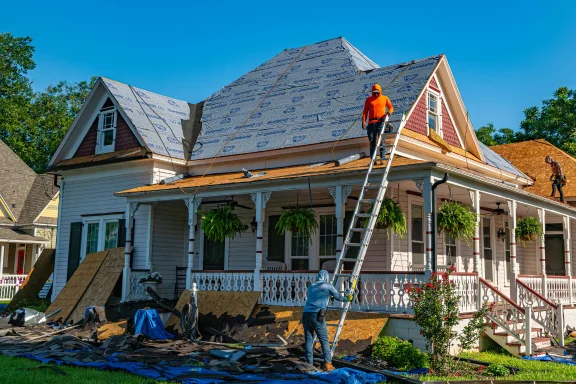
Usually, yes. A home that needs repairs can still qualify for a federally insured HECM reverse mortgage. The FHA appraiser lists every repair needed to meet HUD’s Minimum Property Standards, with an estimated cost to cure. Under HUD Handbook 4000.1 (Section II.B.4, Underwriting the Property, revised August 12, 2026), repairs that cost 15 percent or less of the Maximum Claim Amount can be completed after closing through a repair set-aside. Repairs that cost more than 15 percent must be finished before closing. A defect that cannot feasibly be corrected makes the home ineligible.
A list of repairs is a starting point for a conversation, not a loan decision. The lender needs to review the property and the proposed loan before explaining which conditions apply. A calculator cannot determine whether a repair must be completed before closing or whether a repair set-aside is available for your loan.
In this article6 sections
What are the property requirements for a reverse mortgage?
HUD sets the property rules for HECM loans. The home must be a one- to four-unit property that you occupy as your principal residence: a detached or semi-detached house, a townhouse or row house, a condominium unit in an FHA-approved project, or a manufactured home that meets HUD’s construction and foundation standards. Cooperative units, vacation homes, boarding houses and commercial properties are not eligible. See our HECM eligibility requirements for the borrower and financial rules that apply alongside these.
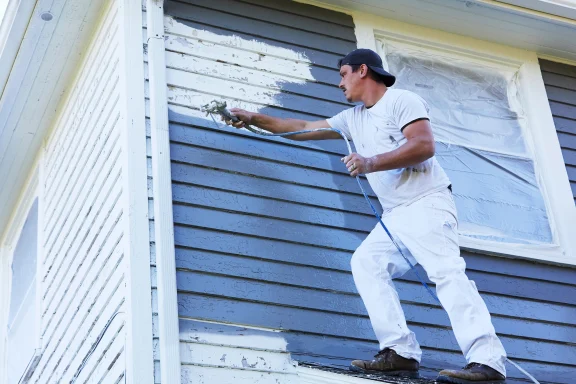
At the appraisal, each living unit must have safe, potable running water under adequate pressure; a bathroom with a toilet, sink and bathtub or shower; adequate heating, domestic hot water and electricity; and a kitchen with a sink and a stove hookup. The lender must also confirm that the structure and foundation will be serviceable for the life of the loan; that the home is free of known environmental and safety hazards; that exterior paint is not cracking, peeling or flaking in a way that exposes the surface underneath; and that no overhead power transmission lines pass over the dwelling or a pool. For homes built before 1978, lead-based paint hazards must be fixed only if a child under six lives or will live in the home. A home contaminated by methamphetamine is ineligible until it is certified safe. (Source: HUD Handbook 4000.1, Section II.B.4, Minimum Property Requirements and Minimum Property Standards.)
Anything the appraiser flags against these standards becomes a required repair with an estimated cost. That is why you need a fresh FHA appraisal even if you just had one: the repair list comes from it.
Describe the condition before choosing a financing approach
Prepare a list of known concerns, photographs if available, and any inspection reports or written estimates you already have. Describe what you have observed without deciding for yourself that an issue is merely cosmetic or that it will prevent approval. Ask the lender how its property review works and what information it needs.
How a HECM repair set-aside works
When the required repairs come to 15 percent or less of the Maximum Claim Amount, HUD lets you finish them after closing. The lender withholds a repair set-aside from your loan proceeds equal to 150 percent of the appraiser’s estimated repair cost, plus a repair administration fee of no more than the greater of $50 or 1.5 percent of the amount advanced for repairs. You sign a Repair Rider that sets the completion date, which can be no later than 12 months after closing. If the work is not finished by then, the lender suspends payments to you until it is. (Source: HUD Handbook 4000.1, Section II.B.4, Repair Set-Aside Requirements.)
Worked example: the appraiser values a home at $300,000 and lists $6,000 of roof repairs. Fifteen percent of a $300,000 Maximum Claim Amount is $45,000, so the roof can be fixed after closing. The set-aside is $9,000 (150 percent of $6,000) plus an administration fee of up to $90 (1.5 percent of $6,000), so about $9,090 is held back from the proceeds you can draw. Once the repairs are inspected and paid for, money left in the set-aside goes back into the line of credit on an adjustable-rate HECM. On a fixed-rate HECM, leftover set-aside funds are not released to you, except to reimburse the cost of materials.
Before you rely on any of this for your own loan, ask the lender for the plan in writing:
| Question | Detail to request |
|---|---|
| What work is required for the proposed loan? | A written list based on the lender’s property review |
| When must each item be completed? | The required timing for each item, including any conditions before closing |
| Is a repair set-aside available for this transaction? | Eligibility, funding, deadlines, inspections and release-of-funds conditions |
| Who pays and when? | Upfront costs, any reserved funds and how they affect available proceeds |
| What if the estimate changes? | The process for cost changes, incomplete work or a missed deadline |
A repair set-aside should not be treated as a guaranteed way to finance work. Ask for the terms of any proposed arrangement before relying on it. Requirements for a loan on your existing home and a loan used to purchase a home differ: on a HECM for Purchase, repairs for health-and-safety or structural problems must be completed by the seller before closing, and a repair set-aside is not permitted.
Check your eligibility
A few details to help us understand your options.
Home maintenance requirements after closing
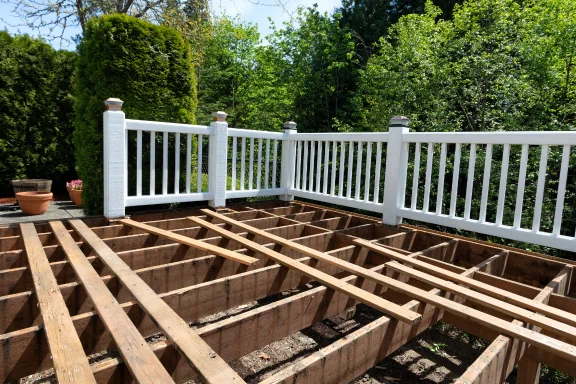
Initial repair conditions are different from the responsibilities that continue for the life of the loan. For HECMs, the CFPB describes the borrower’s ongoing obligations: live in the home as your principal residence, keep it in good repair, and stay current on property taxes, homeowners insurance and any HOA dues. Not meeting these obligations can put the loan in default. Review them alongside the proposed loan’s costs and terms.
Frequently asked questions
Do small repairs mean the loan will be approved?
The apparent size of a repair is not a loan decision. Ask the lender what its property review requires.
Can repairs be completed after closing?
Yes, when the estimated cost is 15 percent or less of the Maximum Claim Amount and the lender establishes a repair set-aside. Repairs above that threshold must be finished before closing, and on a HECM for Purchase the seller must complete health-and-safety repairs before closing. Ask for the conditions in writing.
What type of home is not eligible for a reverse mortgage?
FHA will not insure a HECM on a cooperative unit, a vacation or second home, a boarding house, a commercial property, or any home that fails HUD’s Minimum Property Standards and cannot feasibly be repaired. Manufactured homes qualify only if they meet HUD’s construction and foundation rules.
Can I use a reverse mortgage to pay for home improvements?
Yes. HUD does not restrict how you use HECM proceeds, so upgrades you choose can be paid from a line of credit or a lump sum once any required repairs are handled. See how to pay for home repairs and upgrades with a HECM.
Should I order work before applying?
A financing article cannot determine what work to commission. Discuss loan-related requirements with the lender and obtain qualified advice for the property’s condition; do not treat a potential loan as committed funding.
Will a calculator account for the repairs?
An online estimate is not a property inspection or an approved repair budget. Ask the lender how the proposed work affects the loan and available proceeds.

Discuss the property review
Questions about your home’s condition? Contact South River Mortgage to discuss what should be reviewed before you proceed. Use the calculator as a starting point for estimates, and review HECM eligibility topics to prepare further questions.
Use our reverse mortgage calculator to explore your options, or call 844-230-6679. No pressure. No obligation.